 10 minute read posted by
 Google's Anonymous Reviews Are Here - Here's What Estate Agents Need to Know
Right, let's talk about something that's going to change how your agency handles Google reviews.
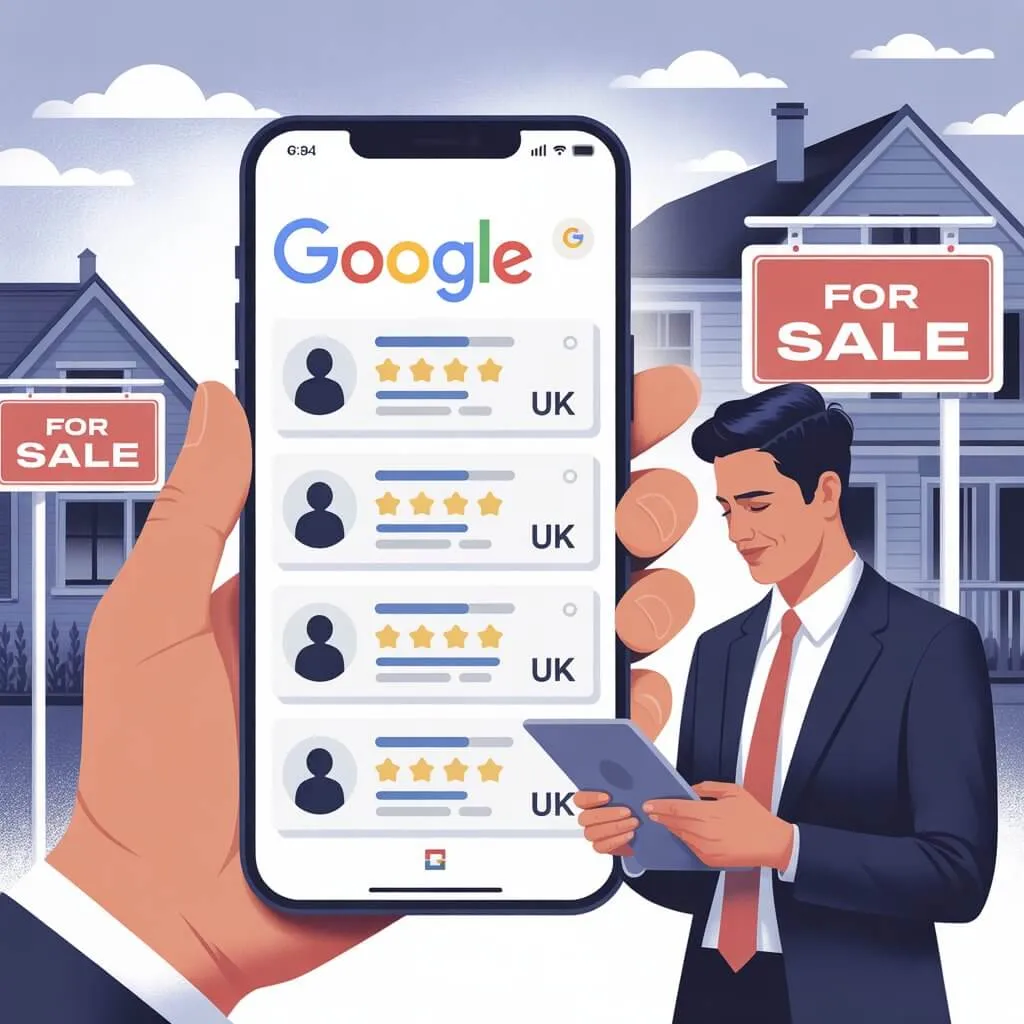
As of November 2025, Google's rolled out a feature that lets people review your business using a nickname and a custom avatar instead of their real name and photo. To anyone browsing your reviews, it looks anonymous. But behind the scenes, Google still knows exactly who left it.
For estate agents? This is massive. It's easily the biggest shift in how reviews work since Google banned fully anonymous reviews back in 2018. And because we're slightly obsessed with review strategy and local SEO, we've been tracking this closely.
⚡ The Quick Version
What's changed: People can now leave Google reviews using display names like "HappyHomeowner2025" instead of "Sarah Johnson"
When: Rolled out November 2025, but still appearing gradually for users
The good news: You'll likely get MORE reviews from people who were previously too private to leave feedback
The bad news: Higher risk of dodgy reviews from competitors or trolls
What to do NOW: Update your review request templates to mention this option
Why This Actually Matters (Beyond the Obvious)
Here's what's really going on beneath the surface.
We've all had that client - brilliant transaction, over the moon with your service, promises to leave a review. Then... nothing. You follow up once, maybe twice, and they go quiet.
Why? Often it's not laziness. It's discomfort.
Maybe their mate works for your competitor down the road and they don't want the awkwardness. Maybe they're intensely private and hate having their name publicly attached to anything online. Maybe they're going through a divorce and don't want their ex knowing they've bought a new place.
Valid reasons, all of them. And until now, those people simply didn't leave reviews.
Google's basically removed that barrier entirely. And that changes the game for every estate agent who's been quietly losing review opportunities to client privacy concerns.
The Upside: Why This Could Be Really Good for You
You'll get reviews from the silent majority
Think about your last 50 transactions. How many clients actually left you a review? 10%? 15% if you're lucky? The other 85% weren't necessarily unhappy - many just didn't want their name online. Now you can genuinely say: "Use a nickname if you prefer - totally anonymous." That simple reassurance could double your review rate.
More frequent feedback means better local SEO
Google's local ranking algorithm loves review velocity. The more consistently reviews come in, the more Google interprets your business as active and relevant. When the friction drops, your review volume typically rises. And that feeds directly into how you rank in the local pack.
More honest insights to actually improve your service
Anonymity encourages candour. People are more likely to mention the slightly awkward thing that could actually help you improve - like "the viewing was great but I felt rushed at the end" or "would've loved a follow-up call after the offer was accepted." That's gold for agencies that genuinely care about getting better.
You can differentiate yourself by being proactive
Most agents won't update their review request process for months. If you mention the anonymity option now, you're already ahead. It positions you as modern, considerate, and tech-savvy - all good signals to send.
The Downside: What Could Go Wrong
Fake reviews just got easier
Let's be honest - competitors and trolls have always been able to create fake Google accounts. But knowing their name won't appear publicly makes it feel safer for bad actors. If someone's already considering leaving a dodgy review, anonymity removes another layer of hesitation.
Trust signals might weaken
Some people naturally distrust anonymous feedback. If your Google listing suddenly shows 15 reviews, and 10 of them say "Anonymous" with a cartoon avatar, it could make prospects wonder if they're genuine. We're not there yet, but it's worth watching.
You can't reach out directly anymore
When "David M" leaves a 3-star review mentioning a specific issue, you can sometimes figure out who they are and reach out privately to resolve it. When "HouseHunter2024" does the same thing, that option's gone. You're stuck with a public response and hoping they see it.
Moderation becomes harder
Right now, if you see a suspicious review from "John Smith" with no profile picture and an account created yesterday, it's obvious. When everyone can be anonymous, spotting the genuinely dodgy ones gets trickier.
What to Watch For: Red Flags in the New System
Not all anonymous reviews are suspicious, but here's what should make your spidey-sense tingle:
Timing patterns
- Multiple 1-star anonymous reviews within 24-48 hours
- Sudden spike in negative reviews just after you won an instruction from a competitor's client
- Reviews appearing late at night or in quick succession (suggests coordination)
Language patterns
- Nearly identical phrasing across multiple "different" reviewers
- Overly generic criticism ("terrible service") with no specific details
- Language that sounds like it's written by the same person trying to vary their style
Account indicators
- Look at the reviewer's profile (even if anonymous, you can often click through)
- Brand new Google account with only one review - yours
- Account that's reviewed 15 businesses in the past week, all negatively
Content inconsistencies
- Claims about experiences that don't match your processes ("waited 3 weeks for a callback" when you have same-day response SLAs with logs to prove it)
- References to staff members who don't exist or events that never happened
If you spot these patterns, screenshot everything and report through Google's review dispute process. Google's fraud detection is getting better, but you still need to flag the obvious stuff.
What Estate Agents Should Do Right Now
1. Update Your Review Request Templates (This Week)
Add this line to every review request email, text, or conversation:
"By the way, you can use a nickname if you prefer - your real name doesn't have to appear publicly."
That one sentence could increase your response rate by 20-30%. Test it.
Exact copy you can use:
Email version: "We'd be incredibly grateful if you could spare 2 minutes to share your experience on Google. And if you'd prefer to keep things private, you can use a nickname instead of your real name - Google now allows that."
Text version: "Thanks again for trusting us with your move! Would you mind leaving a quick Google review? (You can use a nickname if you'd prefer to stay anonymous) [link]"
2. Monitor Your Reviews Like You're Watching the League Table
Set up alerts so you know the moment a review lands. Google Business Profile app notifications work, or use a tool like GatherUp or BirdEye if you want more sophisticated tracking.
Check weekly for:
- Review volume (sudden increases or decreases)
- Percentage of anonymous vs. named reviews
- Average rating trends
- Response rate (yours)
Check monthly for:
- Keyword themes in reviews (what are people actually saying?)
- Competitor review trends (are they getting hit with fake reviews too?)
- Your position in local pack vs. review metrics
3. Make Detail Your New Best Friend
Anonymous reviews need more substance to build trust. When you're asking for feedback, specifically encourage detail:
"It really helps if you can mention what you appreciated most - whether that was the valuation, the viewings, the communication, or the negotiation. Specific examples make all the difference to people researching agents."
Detailed reviews do three things:
- Build trust (they sound real, not fake)
- Help your SEO (keyword-rich content about "valuations in [your area]" or "great communication throughout the sale")
- Give you better insights into what's actually working
4. Diversify Your Social Proof (Yesterday)
Don't put all your eggs in the Google basket. Build review presence across:
- Google (still the most important for SEO)
- Facebook (where older demographics often look)
- Trustpilot or Reviews.io (adds third-party credibility)
- ESTAS reviews (estate agent-specific, builds industry credibility)
A mix is healthier. If Google reviews become problematic, you've got other platforms carrying your reputation.
5. Keep Responding to Every Review (Anonymous or Not)
Your response isn't really for the reviewer - it's for everyone else who reads it later.
For positive anonymous reviews: "Thanks so much for taking the time to share this! We're really pleased we could make the process smooth for you. If you ever need anything in the future, you know where we are."
For negative anonymous reviews: "Thanks for the feedback. We're sorry to hear this was your experience - it's not the standard we aim for. We'd genuinely appreciate the chance to discuss this further and understand what went wrong. Please contact us directly at [email/phone] so we can make this right."
Professional, gracious, solution-focused. That's what prospects notice.
Timeline: What to Watch Over the Next 90 Days
Weeks 1-2: Update your review request process. Test the new messaging with 20 recent clients and measure response rate.
Weeks 3-4: Monitor your Google Business Profile daily. Note any unusual patterns in review volume, timing, or content.
Weeks 5-8: Assess your review mix. What percentage are anonymous? How's your overall rating trending? Are detailed reviews still coming through?
Weeks 9-12: Compare results with Q3/Q4 2024. Are you getting more reviews? Better reviews? Is your local pack ranking improving?
Document everything. This is a significant enough change that you want data to inform your strategy going forward.
Here's What We Think This Really Means
Anonymous reviews will definitely shake things up. Some agencies will get burned by an uptick in fake reviews. Some will see minor trust issues if their profile goes heavily anonymous.
But here's the thing: the agencies that consistently deliver brilliant service - and actively gather real feedback - will come out ahead.
This update gives honest estate agents more opportunity, not less. You'll collect feedback from clients who previously stayed silent. Prospects will see a fuller, more authentic picture of your service. And you'll have more review volume feeding into your local SEO.
The dodgy agencies, the ones coasting on a handful of 5-star reviews from 2019, the ones who've been ignoring review strategy entirely? They're the ones who should be worried.
If you've been doing things properly, this is just another reason to keep going.
Quick FAQs
Q: Can I tell if a review is anonymous before it's posted? No. The reviewer chooses their display option when they write the review.
Q: Can Google remove anonymous reviews more easily? Google's policies haven't changed - anonymous or not, reviews still need to violate guidelines to be removed. But they claim their fraud detection can still identify problematic accounts even if names aren't public.
Q: Should I be worried if most of my new reviews are anonymous? Not necessarily. Monitor the trend, but don't panic. If they're detailed, varied in language, and spread out over time, they're likely genuine.
Q: What if a competitor is obviously leaving fake anonymous reviews? Document everything (screenshots, timestamps, patterns), report through Google's review dispute process, and respond professionally to each review. If it's egregious and ongoing, consider legal advice - defamation laws still apply even for anonymous reviews.
Q: Is this rolling out everywhere at once? No, it's gradual. Some users can leave anonymous reviews now; others won't see the option for weeks or months. Don't worry if clients can't find the feature immediately.
Want Help Staying Ahead of Changes Like This?
We build websites and digital strategies for estate agents across the UK - designed to adapt as platforms like Google evolve.
Whether it's local SEO that doesn't rely on guesswork, review management systems that actually work, or a website that converts browsers into valuations, we help agencies build digital presences that grow with them.
Curious how this could work for your agency?
Book a no-pressure chat and we'll walk you through it.




Share this with
Email
Facebook
Messenger
X
Pinterest
LinkedIn
Copy this link